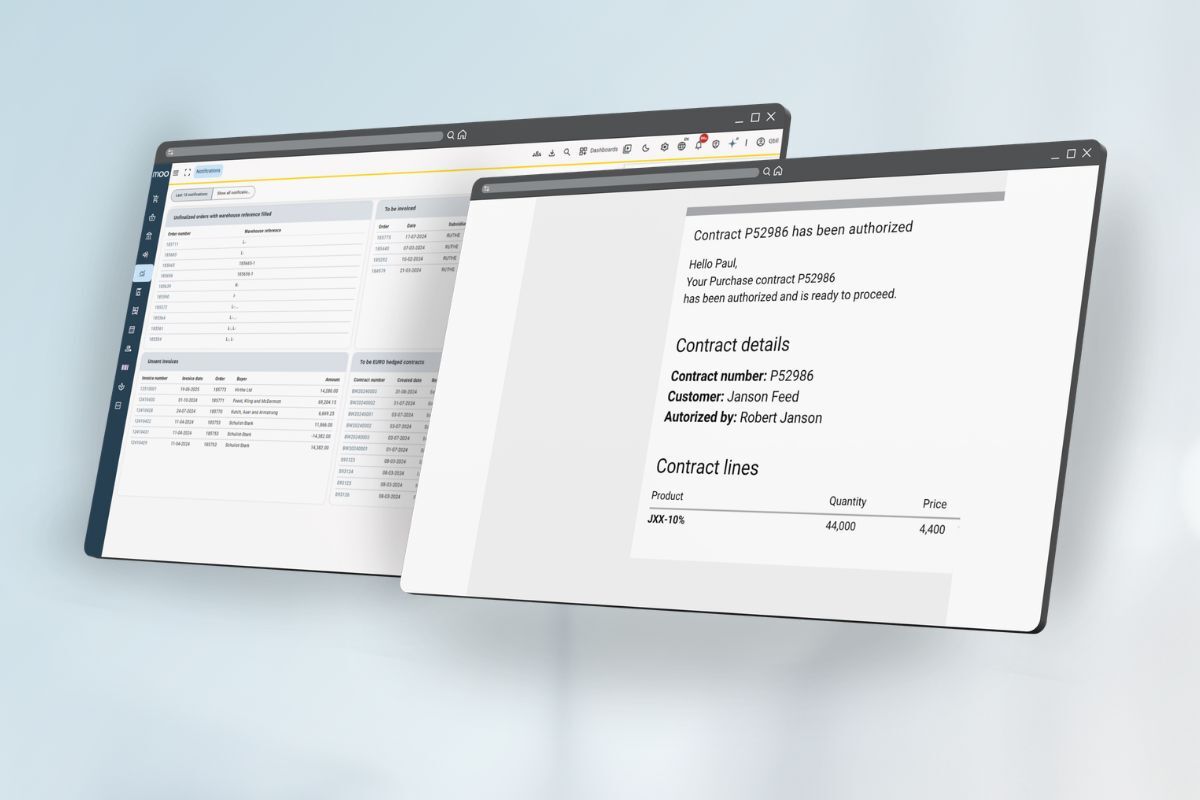

Dairy ingredient traders face significant contract management challenges due to the complex nature of their business operations. Multiple delivery schedules, fluctuating prices, quality specifications, and interconnected buyer-supplier relationships create layers of complexity that traditional tools struggle to handle. These challenges affect daily operations, profit margins, and growth potential across the industry.
What makes contract management so challenging for dairy ingredient traders?
Dairy ingredient trading involves unique complexities that make contract management particularly difficult. Unlike standard product sales, dairy traders deal with bulk commodities such as milk powder, lactose, and whey proteins that require precise specifications, multiple delivery dates, and constant price adjustments based on market conditions.
The interconnected nature of dairy trading relationships adds another layer of complexity. Clients often serve as suppliers in other transactions, creating a web of contracts that must be carefully tracked and managed. A company buying 100,000 kilos of milk powder might also sell butterfat to the same partner in a separate deal.
Quality specifications vary significantly between contracts and can change based on end-user requirements. Protein content, moisture levels, and other technical parameters must be documented and tracked throughout the supply chain. When traders engage in blending, mixing, or repackaging operations, these specifications become even more critical to manage properly.
Price fluctuations in dairy commodities happen frequently, sometimes multiple times per day. Contracts often include pricing mechanisms tied to market indices, currency exchange rates, or delivery dates. Managing these dynamic pricing elements across dozens or hundreds of contracts requires sophisticated tracking systems that many traders lack.
Why do traditional tools fail dairy traders when managing contracts?
Excel spreadsheets and generic software solutions become inadequate when dairy trading businesses grow beyond basic operations. These tools lack the specific functionality needed for batch tracking, position management, and the dynamic relationships that characterise dairy ingredient trading.
Most traders start with Excel because it works well for small volumes and simple transactions. However, as the business grows, maintaining real-time position oversight becomes impossible with spreadsheets. Traders need to know instantly how much they’ve bought versus sold, what’s committed for delivery, and what inventory is available for new sales.
Generic ERP systems often prove too complex and expensive for smaller trading operations. They’re designed for manufacturing or retail businesses, not for the specific workflows of commodity trading. Features such as batch tracking, quality certificates, and position management either don’t exist or require extensive customisation.
Traditional tools also struggle with the relationship management aspect of dairy trading. When the same company appears as both customer and supplier across multiple contracts, generic systems create confusion and data duplication. Dairy traders need systems that understand these complex relationships and can manage them seamlessly.
Integration capabilities pose another significant challenge. Traders work with various systems for accounting, logistics, and market data. When these systems can’t communicate effectively, manual data entry increases errors and consumes valuable time that should be spent on core trading activities.
How do contract management struggles impact daily trading operations?
Poor contract management creates immediate operational inefficiencies that directly affect profitability and growth potential. Traders spend excessive time on manual processes, lose track of commitments, and miss opportunities due to inadequate oversight of their positions and obligations.
Manual contract tracking leads to significant time wastage. Traders find themselves constantly updating spreadsheets, cross-referencing delivery schedules, and manually calculating positions. This administrative burden prevents them from focusing on relationship building and identifying new trading opportunities.
Margin erosion occurs when traders can’t accurately track their positions in real time. Without proper oversight, it’s easy to oversell, undersell, or miss favourable market movements. Small margins in commodity trading mean these errors can quickly affect profitability.
Compliance risks increase when contract details aren’t properly documented and tracked. Quality specifications, delivery requirements, and payment terms must be met precisely. Missing these requirements can result in penalties, damaged relationships, or legal disputes that harm business reputation.
Customer service suffers when traders can’t quickly access contract information. Clients expect immediate responses about delivery schedules, quantities, and specifications. Searching through multiple spreadsheets or systems creates delays that frustrate customers and can potentially cost business.
Growth limitations become apparent because manual processes don’t scale effectively. Successful traders find their systems breaking down as volumes increase, forcing them to choose between growth and operational control.
What should dairy ingredient traders look for in contract management solutions?
Effective ERP software for the dairy industry should provide real-time position tracking, automated workflows, and industry-specific functionality. The ideal solution understands dairy trading relationships, integrates with existing systems, and scales with business growth without overwhelming complexity.
Real-time position management is the most critical feature. Traders need instant visibility into what they’ve bought, sold, and committed for delivery. The system should automatically calculate available positions and alert traders to potential overselling or inventory shortages.
Contract lifecycle management should handle everything from initial quotations through final delivery and payment. This includes automated reminders for delivery dates, quality certificate tracking, and integration with logistics providers. The system should maintain complete audit trails for compliance purposes.
Quality specification tracking is essential for dairy ingredient traders. The solution should store and track protein content, moisture levels, and other technical parameters. When blending or repackaging occurs, the system should calculate resulting specifications automatically.
Integration capabilities ensure the solution works with existing accounting, logistics, and market data systems. This eliminates manual data entry and ensures information consistency across all business operations.
Industry-specific workflow support makes the difference between generic software and purpose-built solutions. The system should understand dairy trading relationships, commodity pricing mechanisms, and the interconnected nature of buyer-supplier relationships.
Scalable implementation allows traders to start with essential features and add functionality as their business grows. Professional implementation support ensures systems are configured correctly and teams are properly trained for successful adoption.
Choosing the right contract management solution transforms dairy trading operations from reactive to proactive. With the right systems in place, traders gain the oversight and control needed to grow their business while maintaining the relationships that drive long-term success. For traders ready to move beyond spreadsheets, exploring specialised ERP software for the dairy industry can provide the foundation for sustainable growth and improved profitability.
Frequently Asked Questions
How long does it typically take to implement a specialized dairy trading ERP system?
Implementation timelines vary based on business complexity and data migration requirements, but most dairy trading operations can expect 2-4 months for a complete rollout. This includes system configuration, data migration from existing spreadsheets, staff training, and testing phases. Starting with core contract management features and gradually adding advanced functionality can accelerate initial deployment.
What's the biggest mistake dairy traders make when transitioning from Excel to an ERP system?
The most common mistake is trying to replicate existing Excel processes exactly within the new system instead of leveraging the ERP's built-in workflows. This approach negates many benefits and creates unnecessary complexity. Successful transitions involve redesigning processes to take advantage of automation, real-time tracking, and integrated functionality that wasn't possible with spreadsheets.
Can ERP systems handle the complex pricing mechanisms common in dairy commodity trading?
Yes, specialized dairy trading ERPs are designed to manage dynamic pricing structures including market index-linked contracts, currency fluctuations, and delivery date adjustments. These systems can automatically update contract values based on predefined pricing formulas and provide real-time profit margin calculations as market conditions change throughout the day.
How do I ensure my team will actually use the new system instead of reverting to familiar spreadsheets?
Success depends on comprehensive training, clear process documentation, and demonstrating immediate value to users. Start by identifying power users who can become internal champions, provide hands-on training with real scenarios, and establish clear policies about data entry responsibilities. Most importantly, ensure the system makes daily tasks easier, not more complicated.
What happens to my existing contract data when implementing a new ERP system?
Professional ERP implementations include comprehensive data migration services to transfer existing contracts, customer information, and transaction history from spreadsheets and other systems. This process involves data cleaning, validation, and testing to ensure accuracy. Most providers offer parallel running periods where both old and new systems operate simultaneously until you're confident in the transition.
How can I justify the cost of specialized ERP software for a smaller dairy trading operation?
Calculate the hidden costs of manual processes: time spent on administrative tasks, errors from manual data entry, missed opportunities due to poor position visibility, and potential compliance issues. Most traders find that eliminating just 10-15 hours of weekly administrative work justifies the investment, not counting improved decision-making capabilities and reduced error rates.
What integration capabilities should I prioritize when selecting a dairy trading ERP?
Focus first on accounting system integration to eliminate duplicate data entry and ensure financial accuracy. Next, prioritize logistics and shipping integrations for automated delivery tracking. Market data feeds and banking connections for payments are also valuable. Start with essential integrations and add others as your operations grow and require more sophisticated automation.