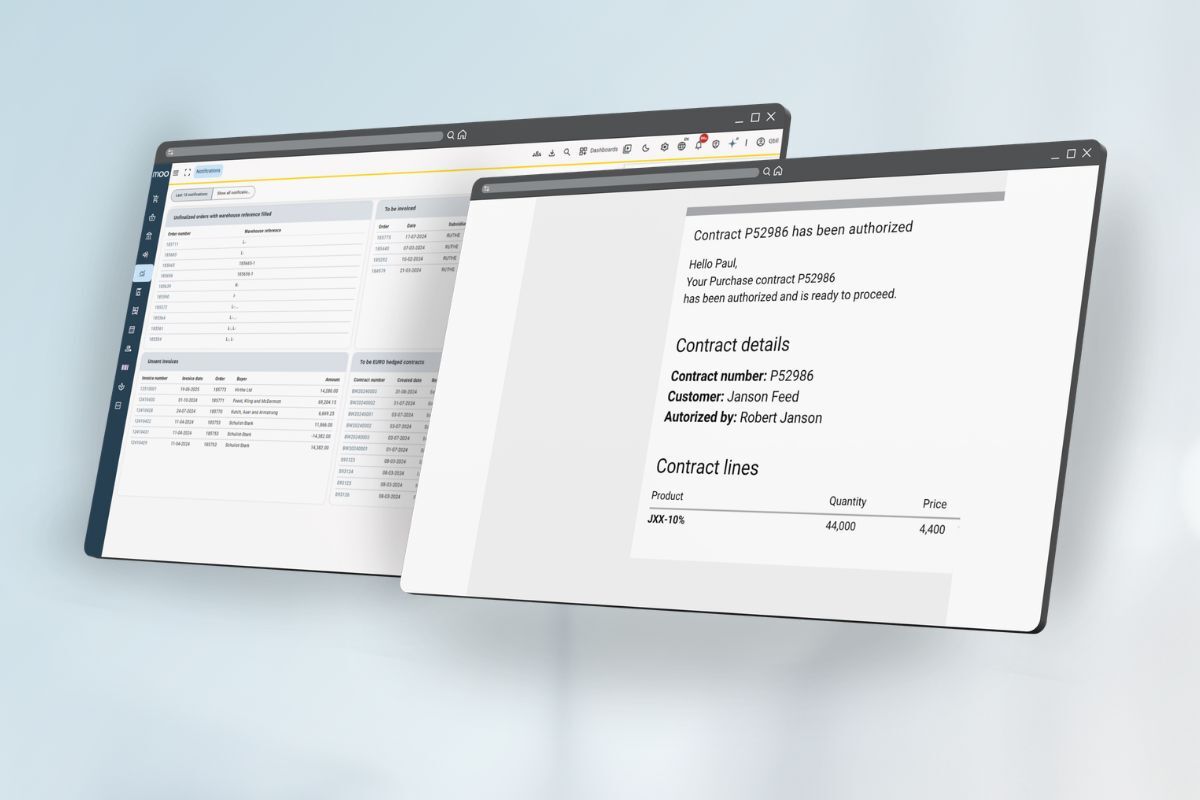

Real-time position tracking gives dairy commodity traders instant visibility into their buy and sell positions, contract obligations, and inventory levels. Without this critical insight, traders operating on thin margins risk overcommitting, missing opportunities, and incurring significant financial losses. Modern Logiciel ERP pour l'industrie laitière operations replaces inadequate Excel-based systems with comprehensive tracking capabilities that are essential for profitable trading decisions.
What is real-time position tracking and why do dairy traders need it?
Real-time position tracking is a system that instantly displays a trader’s current buy and sell positions, outstanding contract obligations, and available inventory across all dairy commodities. This technology provides immediate access to critical trading information, including contract balances, delivery schedules, and margin exposure, without delays or manual calculations.
Dairy commodity trading operates on extremely tight margins, where market prices fluctuate rapidly throughout the day. Traders frequently manage multiple contracts simultaneously, buying milk powder from producers while selling to manufacturers with overlapping delivery schedules. Traditional Excel spreadsheets become inadequate as trading volumes grow because they require manual updates, lack real-time integration, and cannot automatically handle complex position calculations.
The volatile nature of dairy markets means that a trader’s position can shift dramatically within hours. When dealing with contracts for 100,000 kilos of milk powder delivered in batches over several months, understanding exactly how much has been purchased versus sold becomes crucial to maintaining profitability. Excel simply cannot provide the instant, accurate position visibility required for confident trading decisions in fast-moving markets.
How does poor position visibility affect dairy commodity trading profits?
Poor position visibility directly erodes trading profits through margin compression, overcommitment risk, and missed market opportunities. Traders without real-time insight into their positions often discover problems too late, leading to emergency purchases at unfavorable prices or contract defaults that damage customer relationships and future business prospects.
When traders lack immediate access to their position data, they frequently overcommit to sales without sufficient inventory or purchase coverage. This creates a dangerous situation in which they must quickly source products at potentially higher market prices, eliminating planned profit margins. The cascading effect continues as stressed positions force reactive rather than strategic decision-making.
Missed opportunities represent another significant cost of poor visibility. Dairy markets move quickly, and advantageous pricing windows often last only hours. Traders who cannot instantly assess their current exposure miss profitable arbitrage opportunities or fail to hedge against adverse price movements. These missed chances accumulate over time, substantially reducing overall trading profitability.
Customer relationships suffer when poor position visibility leads to delivery delays or quality issues. Dairy ingredient buyers rely on precise timing for their production schedules, and any disruption can result in lost business and a damaged reputation within the tight-knit trading community, where recommendations drive new opportunities.
What information should real-time position tracking show dairy traders?
Effective real-time position tracking must display contract balances, delivery schedules, inventory levels, price exposure, margin calculations, and forward commitments in a single, integrated view. This comprehensive dashboard enables traders to make informed decisions quickly without switching between multiple systems or manually calculating complex position data.
Contract balances show exactly how much product has been purchased versus sold for each commodity type, including milk powder, lactose, whey, and other dairy ingredients. This information must update automatically as new contracts are entered or existing agreements are modified, providing an accurate snapshot at any moment.
Delivery schedules reveal when products must be received from suppliers and shipped to customers, highlighting potential timing conflicts or inventory shortages before they become critical issues. Price exposure data shows the financial risk associated with current positions, including potential losses if market prices move unfavorably.
Margin calculations display the profitability of each position in real time, accounting for purchase costs, sale prices, storage fees, and logistics expenses. Forward commitments indicate future obligations that will affect cash flow and inventory requirements, enabling better planning and risk management.
Integration with existing accounting systems ensures that position data reflects actual financial transactions, eliminating discrepancies between trading records and financial statements that can lead to costly errors.
How do successful dairy traders use real-time position data for decision making?
Successful dairy traders use real-time position data to assess risk exposure, identify profitable opportunities, negotiate with confidence, and plan strategic market moves. This instant access to comprehensive position information transforms trading from reactive problem-solving into proactive opportunity capture and risk management.
Risk assessment becomes systematic when traders can instantly see their total exposure across all commodities and time periods. They quickly identify concentration risks where too much capital is committed to a single product or delivery period, then take corrective action before market volatility creates problems.
Opportunity identification improves dramatically with real-time visibility. When market prices move favorably, traders immediately know their available capacity for additional purchases or sales. This enables quick decision-making that captures profitable price movements before they disappear.
Customer negotiations benefit from accurate position knowledge. Traders can confidently quote prices and delivery terms, knowing exactly what inventory they have available and what their true costs are. This confidence often leads to better deals and stronger customer relationships.
Strategic planning becomes more sophisticated when traders can model different scenarios using current position data. They can evaluate the impact of potential new contracts, assess seasonal inventory needs, and plan cash flow requirements with greater accuracy.
Moderne Logiciel ERP pour l'industrie laitière applications provide this comprehensive position tracking capability, typically implemented and operational within days rather than months. Professional implementation support ensures that trading teams can quickly adapt to real-time position management, transforming operational efficiency and profitability. For traders ready to move beyond Excel-based tracking, professional consultation can help determine the most effective approach for their specific trading requirements.
Foire aux questions
How quickly can a dairy trading operation implement real-time position tracking?
Most modern ERP systems designed for dairy commodity trading can be implemented and operational within 2-4 weeks, depending on the complexity of existing contracts and data migration requirements. The key is choosing software that integrates easily with current accounting systems and provides comprehensive training support for trading teams.
What happens if the real-time tracking system goes down during active trading hours?
Professional-grade dairy trading ERP systems include redundancy measures, cloud-based backups, and offline access capabilities to prevent trading disruptions. Most systems maintain local data caches and provide manual override functions, ensuring traders can continue operations while technical issues are resolved quickly by support teams.
Can real-time position tracking handle multiple currencies and international contracts?
Yes, comprehensive dairy trading systems automatically handle multi-currency transactions, apply real-time exchange rates, and calculate position exposure in your base currency. This is essential for traders dealing with international suppliers and customers across different markets and currencies.
How does real-time tracking integrate with existing accounting and inventory management systems?
Modern dairy ERP solutions use APIs and standard data formats to seamlessly connect with popular accounting software like QuickBooks, SAP, or custom systems. This integration ensures that trading positions automatically update financial records and inventory levels without manual data entry or reconciliation.
What training do trading teams need to effectively use real-time position tracking?
Most trading teams become proficient within 1-2 weeks with proper training focused on dashboard navigation, position analysis, and alert management. The key is hands-on training using actual trading scenarios and ongoing support during the initial implementation period to build confidence and optimize workflows.
How can traders validate that their real-time position data is accurate?
Effective systems include built-in reconciliation tools that automatically cross-check position data against contract documents, delivery receipts, and financial transactions. Regular automated reports highlight any discrepancies, and audit trails track all position changes to ensure data integrity and regulatory compliance.
What are the most common mistakes traders make when transitioning from Excel to real-time tracking?
The biggest mistake is trying to replicate Excel workflows instead of adapting to automated processes. Traders often over-complicate initial setup by importing unnecessary historical data or fail to establish proper user permissions and approval workflows, leading to confusion and resistance from team members.