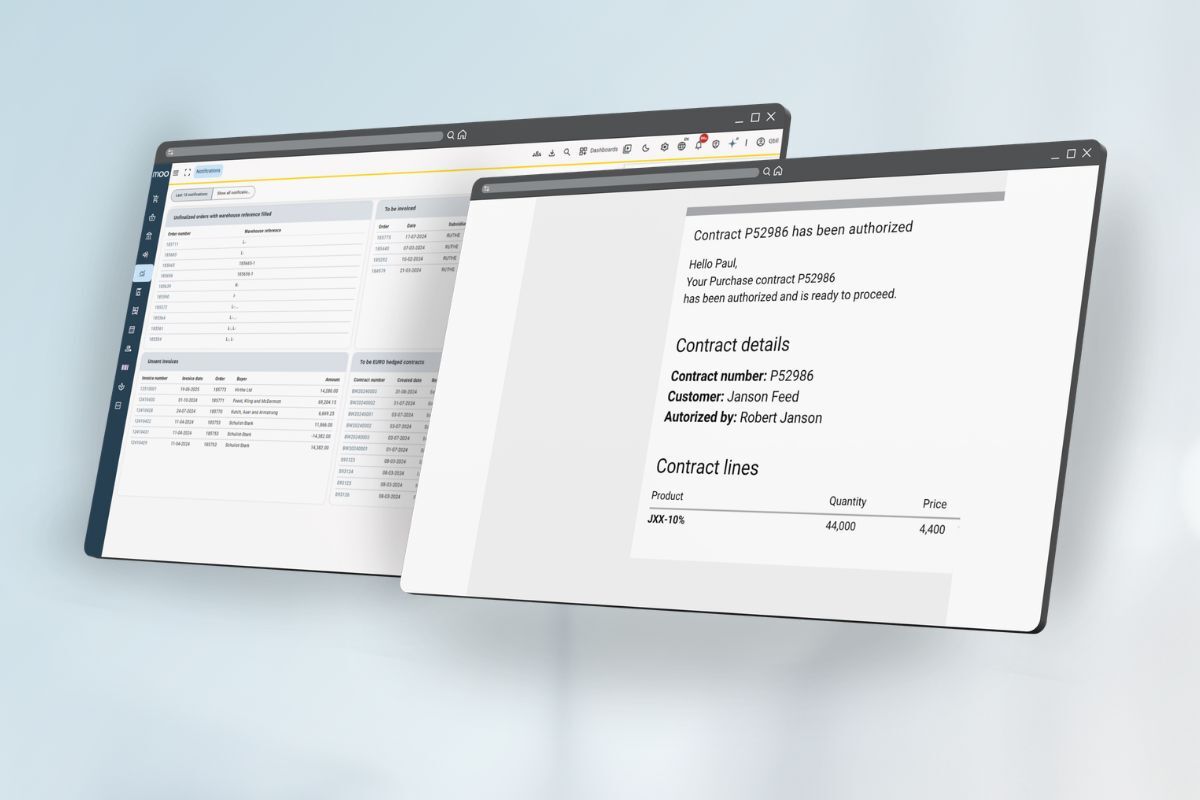

Your dairy trading business outgrows Excel when manual processes become error-prone and time-consuming, making it difficult to track multiple contracts and maintain real-time position overviews. This typically happens as trading volumes increase and operations become more complex. Common warning signs include frequent reconciliation issues, inventory management challenges across locations, and reduced visibility of trading positions, which could expose your business to unnecessary risks.
What are the warning signs that your dairy trading business has outgrown Excel?
Excel’s limitations become apparent when manual data entry errors start affecting your trading accuracy and you struggle to track multiple contracts simultaneously. Key warning signs include spending excessive time on reconciliation processes, difficulty maintaining real-time position overviews, and challenges managing inventory across multiple locations.
Manual data entry errors multiply as your trading volume increases. When you’re handling dozens of contracts for milk powder, lactose, or butterfat, updating spreadsheets becomes prone to mistakes that can cost thousands. You might find yourself double-checking figures constantly or discovering discrepancies days after transactions.
Real-time position tracking becomes nearly impossible with Excel. In dairy ingredient trading, knowing your exact position (how much you’ve bought versus sold) is crucial for managing risk. Excel requires manual updates, meaning your position data is often hours or days behind actual market activity.
Inventory management across multiple locations creates additional complexity. When you’re storing milk powder in various warehouses or managing deliveries to different processing facilities, Excel’s static nature makes it difficult to maintain accurate, up-to-date inventory levels. This can lead to overselling or missed opportunities.
Why do dairy ingredient traders start with Excel in the first place?
Dairy traders typically start with Excel because it’s familiar, flexible, and cost-effective for simple buy-sell transactions. Excel offers immediate availability, customisable tracking capabilities, and works adequately when trading volumes are low and operations remain straightforward, with basic commodity transactions.
The low cost and familiar interface make Excel an obvious starting point. Most traders already know how to use spreadsheets, and there’s no additional software investment required. You can quickly set up tracking systems for contracts, deliveries, and payments without learning new platforms.
Excel’s flexibility allows custom tracking solutions. You can create spreadsheets that match your specific trading patterns, whether you’re focusing on milk powder, whey protein, or plant-based alternatives. This customisation feels ideal when your business operates through straightforward transactions.
For simple buy-sell transactions, Excel provides adequate functionality. When you’re making occasional trades with familiar suppliers and customers, basic spreadsheet tracking handles contract details, delivery schedules, and payment terms without added complexity.
What happens when dairy trading operations become too complex for spreadsheets?
Complex dairy trading operations suffer from reduced visibility and increased risk exposure when relying on spreadsheets. Operational breakdowns include a rise in manual errors, difficulty managing contract variations, challenges with multi-currency transactions, and an inability to scale efficiently as the business grows.
Reduced visibility of trading positions creates serious risk exposure. When you’re trading multiple dairy ingredients simultaneously, Excel’s manual update requirements mean you might not know your true market position until it’s too late. This can result in overexposure or missed hedging opportunities.
Manual errors multiply across interconnected transactions. A single mistake in quantity or pricing can cascade through multiple spreadsheets, affecting contract calculations, inventory levels, and financial projections. These errors often remain undetected until reconciliation processes reveal discrepancies.
Contract variations become difficult to manage systematically. Dairy trading often involves complex arrangements with partial deliveries, quality specifications, and pricing adjustments. Excel struggles to handle these variations while maintaining clear audit trails and accurate position tracking.
Multi-currency transactions add another layer of complexity. When trading internationally with suppliers in New Zealand, customers in Asia, and operations in Europe, Excel requires manual currency conversions and constant rate updates, increasing the likelihood of errors and the administrative burden.
How do successful dairy traders manage growth beyond Excel limitations?
Successful dairy traders transition to specialised ERP software for dairy industry operations that integrates contract management, position tracking, and inventory control. Professional trading platforms designed for commodity trading provide real-time visibility, automated processes, and scalable solutions that support business growth without adding operational complexity.
Specialised ERP systems designed for dairy and ingredient trading offer integrated solutions that handle the unique requirements of commodity trading. These platforms understand the nuances of trading milk powder, lactose, and other dairy ingredients, providing features specifically designed for this market.
Professional trading software eliminates manual processes that create bottlenecks and errors. Automated contract management, real-time position tracking, and integrated inventory control provide the visibility needed to make informed trading decisions quickly and confidently.
Modern ERP software for dairy industry operations typically offers rapid implementation, often within days rather than months. This quick deployment means you can start benefiting from improved processes without lengthy disruption to ongoing trading activities. Support à l'implémentation professionnelle ensures a smooth transition from Excel-based systems.
The scalability of purpose-built trading software means your system grows with your business. Whether you’re expanding into new dairy ingredients, increasing trading volumes, or adding international markets, professional platforms adapt to support increased complexity without requiring system changes or workarounds.
Making the transition from Excel to professional trading software represents a natural evolution for growing dairy trading businesses. The key is recognising when spreadsheet limitations start constraining your operations and choosing solutions designed specifically for your industry’s unique requirements. Parler avec des spécialistes who understand dairy trading can help you evaluate options that match your business needs and growth plans.
Foire aux questions
How long does it typically take to transition from Excel to a specialized dairy trading ERP system?
Most dairy trading businesses can complete the transition within 2-4 weeks, depending on data complexity and customization needs. Professional ERP systems designed for dairy trading often include data migration tools and implementation support to minimize disruption to ongoing operations. The key is starting with clean, organized Excel data and working with experienced implementation specialists who understand dairy commodity trading workflows.
What's the typical cost difference between continuing with Excel and investing in specialized trading software?
While Excel appears free, the hidden costs of manual errors, reconciliation time, and missed opportunities often exceed the investment in professional software within 6-12 months. Specialized dairy trading ERP systems typically cost a fraction of what a single significant trading error might cost, and the efficiency gains usually pay for the software investment quickly through reduced administrative overhead and improved decision-making capabilities.
Can I still use Excel for some functions after implementing a dairy trading ERP system?
Yes, most businesses continue using Excel for ad-hoc analysis, custom reports, and financial modeling while letting the ERP handle core trading operations like contract management and position tracking. The key is avoiding duplicate data entry and ensuring your ERP system can export data to Excel when needed for specialized analysis or reporting to stakeholders who prefer spreadsheet formats.
What happens to my historical trading data when I move away from Excel?
Professional dairy trading ERP systems typically include data migration tools that can import your historical Excel data, preserving contract history, trading patterns, and financial records. This historical data becomes more valuable in an ERP system because it can be analyzed alongside real-time operations to identify trends, optimize trading strategies, and maintain continuity in customer and supplier relationships.
How do I know if my team will be able to adapt to new trading software after years of using Excel?
Modern dairy trading ERP systems are designed with intuitive interfaces that feel familiar to Excel users, and most teams adapt within days rather than weeks. Look for software providers that offer comprehensive training and ongoing support. The transition is often smoother than expected because the new system eliminates many of the manual, repetitive tasks that cause frustration with Excel-based workflows.
What's the biggest mistake dairy traders make when outgrowing Excel?
The biggest mistake is waiting too long to make the transition, often after a costly error or missed opportunity has already occurred. Many traders also make the error of choosing generic business software instead of specialized dairy trading platforms, which leads to expensive customizations and ongoing operational challenges. It's better to transition proactively when you recognize the warning signs rather than reactively after problems arise.