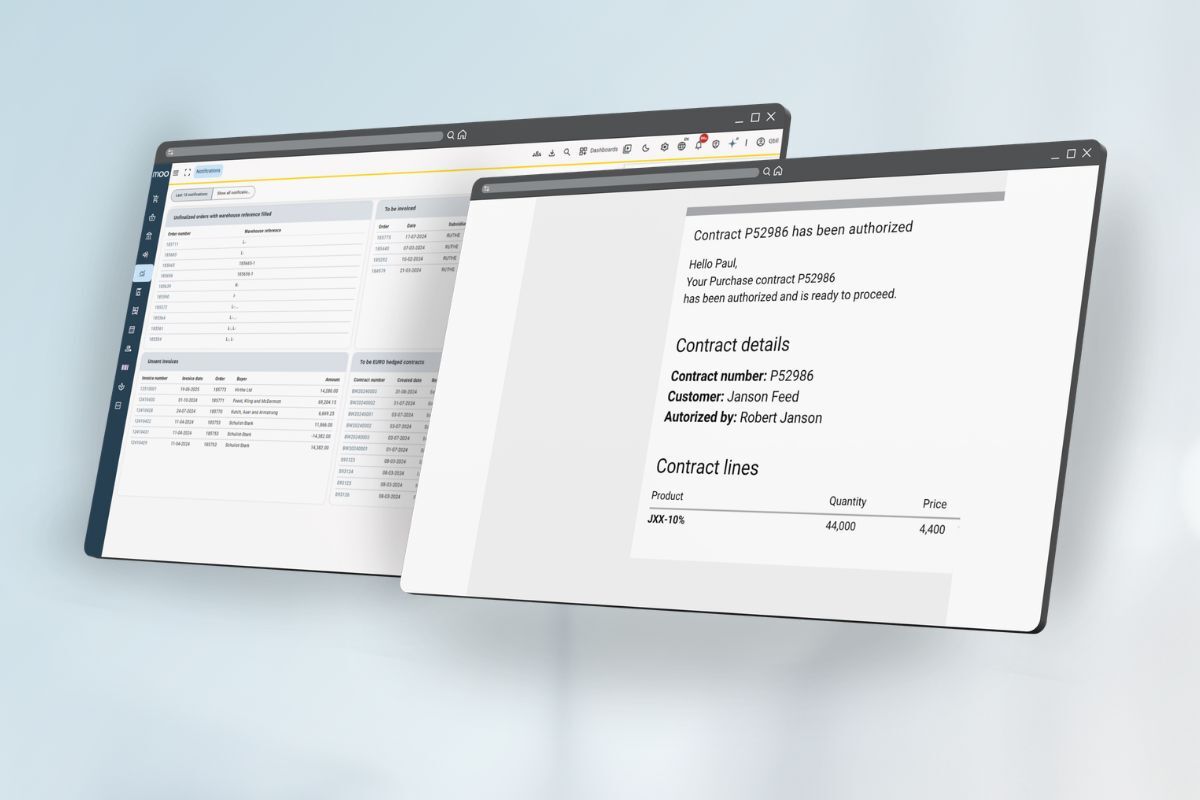

Accurate dairy ingredient trading records require systematic processes, automated validation, and standardised documentation to prevent costly errors. Manual data-entry mistakes, complex contract variations, and integration challenges between different systems create significant accuracy risks. Specialised ERP software for the dairy industry addresses these challenges through real-time tracking, automated calculations, and centralised record management that maintains precision across all trading activities.
What are the biggest challenges to maintaining accurate dairy trading records?
The primary challenges include manual data-entry errors, complex contract variations across multiple suppliers, and integration difficulties between trading, logistics, and accounting systems. Multi-batch deliveries against a single contract create tracking complexity, while fluctuating prices and detailed quality specifications add layers of data that must be precisely recorded and maintained.
Manual data entry represents the largest source of inaccuracy in dairy ingredient trading. When traders enter contract details, delivery quantities, and pricing information by hand, simple typing errors can cascade into significant financial discrepancies. A misplaced decimal point in a lactose shipment or an incorrect protein percentage for milk powder can affect entire batch calculations.
Complex contract variations compound these challenges. Dairy ingredient contracts often include multiple delivery dates, varying quantities per batch, quality specifications that change seasonally, and pricing formulas tied to market indices. Each variable creates another opportunity for recording errors, particularly when managing dozens of active contracts simultaneously.
Integration issues between the different systems used by traders, suppliers, and customers create data inconsistencies. When contract information exists in one system, inventory tracking in another, and financial records in a third, maintaining accuracy across all platforms becomes extremely difficult without automated synchronisation.
How do you prevent errors when managing multiple dairy ingredient contracts?
Error prevention requires standardised documentation processes, automated data-validation rules, and real-time position tracking that immediately flags discrepancies. Systematic approaches include batch-level record-keeping, verification procedures at each transaction stage, and automated calculations that eliminate manual computation errors across complex trading scenarios.
Standardised documentation processes ensure consistent data capture across all contracts. This means using identical formats for recording quality specifications, delivery terms, and pricing structures, regardless of supplier or product type. When every contract follows the same documentation pattern, the likelihood of missing critical information or recording it incorrectly decreases significantly.
Automated data validation provides immediate error detection. Modern trading systems can automatically verify that protein percentages fall within acceptable ranges for specific dairy ingredients, flag unusual pricing that deviates from market norms, and ensure delivery quantities align with contracted amounts. These validation rules catch errors at the point of entry rather than during reconciliation.
Real-time position tracking offers continuous oversight of contracted versus delivered quantities. This visibility allows traders to spot discrepancies immediately rather than discovering shortfalls or overages weeks later during monthly reconciliations. Batch-level record-keeping ensures each delivery can be traced back to specific contract terms and quality requirements.
What’s the difference between manual and automated dairy trading record systems?
Manual systems like Excel require constant human input and calculation, leading to higher error rates and greater time investment. Automated trading software provides real-time validation, integrated calculations, and centralised data management with significantly improved accuracy. The transition from manual to automated systems typically improves record accuracy while reducing administrative time.
Accuracy differs substantially between approaches. Excel-based systems rely entirely on human precision for data entry, formula creation, and ongoing maintenance. Even experienced traders make occasional errors when managing multiple spreadsheets with complex, interconnected calculations. Automated systems eliminate calculation errors through pre-built formulas and validation rules.
Time investment varies dramatically. Manual systems require constant updating across multiple spreadsheets, manual calculations for position tracking, and regular reconciliation between different data sources. Automated systems handle these processes instantly, freeing traders to focus on business development rather than administrative tasks.
Scalability limitations become apparent as trading volumes grow. Excel systems become unwieldy with hundreds of contracts, multiple product lines, and complex delivery schedules. ERP software for the dairy industry scales naturally, handling increased complexity without proportional increases in administrative overhead.
Integration capabilities represent a fundamental difference. Manual systems exist in isolation, requiring separate processes to share information with accounting, logistics, or customer systems. Automated trading platforms integrate seamlessly with existing business systems, ensuring data consistency across all operational areas.
How do you maintain accuracy when dealing with international dairy suppliers?
International trading accuracy requires automated currency conversions, standardised measurement protocols, and clear communication procedures across time zones. Documentation requirements vary by country, while different quality specifications and measurement standards create additional complexity. Systematic approaches include automated conversion calculations and structured communication protocols that ensure accurate cross-border transactions.
Currency conversions present ongoing accuracy challenges. Exchange rates fluctuate daily, affecting contract values, payment amounts, and profitability calculations. Manual currency calculations introduce errors, particularly when contracts span multiple currencies or include currency-hedging arrangements. Automated systems update exchange rates regularly and recalculate positions accordingly.
Measurement standards vary between countries and regions. European suppliers might quote in metric tonnes, while American buyers expect pounds or short tons. Protein content might be expressed as a percentage in some regions and grams per litre in others. Standardising these measurements within your trading system prevents conversion errors.
Time-zone coordination affects communication timing and documentation deadlines. When dealing with suppliers across multiple continents, ensuring accurate record-keeping requires structured communication protocols that account for different business hours and working days. This includes automated timestamp recording and clear documentation of when agreements were reached.
Documentation requirements differ significantly between countries, affecting customs clearance, quality certification, and payment processing. Maintaining accurate records means understanding and systematically capturing all required information for each jurisdiction involved in the transaction.
Quality specifications and testing protocols vary internationally, requiring precise documentation of which standards apply to each contract. European dairy ingredient specifications might differ from American or Asian requirements, and maintaining accuracy means clearly recording which standards govern each transaction.
Maintaining accurate dairy ingredient trading records becomes manageable with systematic approaches and appropriate technology. The complexity of modern dairy trading demands more than Excel spreadsheets can reliably provide. Professional trading software designed specifically for dairy ingredient operations eliminates most accuracy challenges while providing the scalability needed for business growth. If you’re ready to move beyond manual record-keeping, contact us to discuss how automated solutions can improve your trading accuracy and operational efficiency.
Frequently Asked Questions
How long does it typically take to implement an automated dairy trading system?
Implementation timeframes vary based on business complexity, but most dairy trading operations can expect 2-4 months for full deployment. This includes data migration from existing systems, staff training, and integration with accounting and logistics platforms. The key is starting with core trading functions and gradually adding advanced features like automated reporting and analytics.
What happens to historical trading data when switching from Excel to automated systems?
Historical data can be migrated into automated systems, though the process requires careful mapping of existing spreadsheet structures to database formats. Most ERP implementations include data migration services that preserve contract history, pricing trends, and supplier performance metrics. Clean, well-organized Excel files migrate more easily than complex spreadsheets with multiple tabs and custom formulas.
How do automated systems handle seasonal pricing variations and market volatility?
Modern dairy trading systems include dynamic pricing modules that automatically adjust contract values based on market indices, seasonal factors, and predetermined formulas. They can track multiple pricing mechanisms simultaneously—from fixed prices to formula-based calculations tied to commodity exchanges. Real-time market data feeds ensure pricing accuracy even during volatile periods.
What training is required for staff to effectively use dairy trading ERP software?
Most staff need 1-2 weeks of initial training to become proficient with core functions like contract entry, delivery tracking, and basic reporting. Advanced features like custom analytics and system administration require additional specialized training. Many software providers offer ongoing support and refresher training as part of their service packages.
Can automated trading systems integrate with existing quality management and testing protocols?
Yes, modern dairy trading systems can integrate with laboratory information management systems (LIMS) and quality control databases. This integration automatically links quality test results to specific batches and contracts, ensuring compliance with specifications. The system can flag quality deviations immediately and adjust inventory availability based on test outcomes.
What are the most common mistakes companies make when transitioning from manual to automated record-keeping?
The biggest mistake is trying to replicate existing manual processes exactly within the automated system instead of leveraging automation capabilities. Companies also underestimate the importance of data cleanup before migration and often rush implementation without adequate staff training. Successful transitions involve redesigning workflows to take advantage of automation features while maintaining familiar reporting formats.
How do you ensure data backup and recovery for critical trading records?
Professional dairy trading systems include automated daily backups, cloud-based storage redundancy, and disaster recovery protocols. Most systems maintain multiple backup copies across different geographic locations and offer rapid recovery options. Regular backup testing ensures data integrity and quick restoration capabilities in case of system failures or cyber incidents.