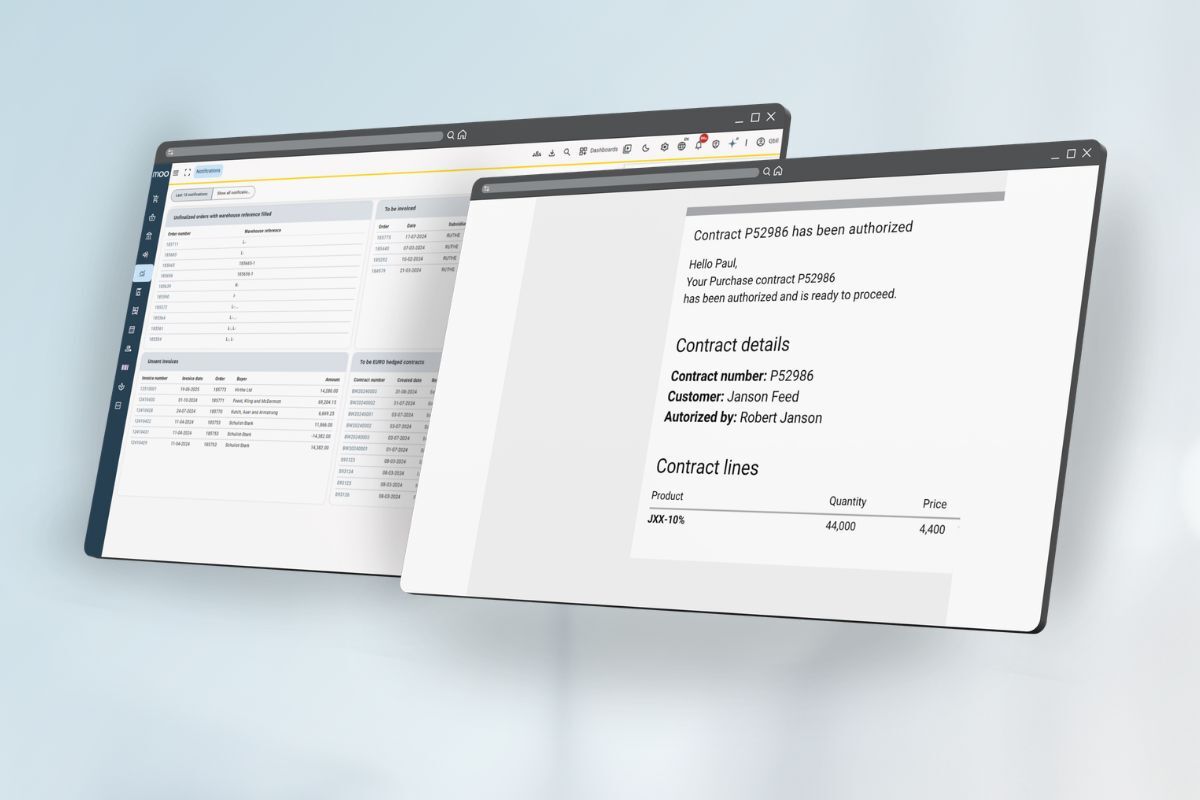

Dairy trading software is specialised business software designed specifically for companies that trade dairy ingredients such as milk powder, lactose, whey, and butter. Unlike generic business systems, it includes commodity-specific features such as real-time position management, contract tracking, and batch handling that dairy ingredient traders need for their day-to-day operations.
What makes trading software different from regular business software?
Trading software is built specifically for commodity trading operations, whereas regular business software serves general company needs. Trading software focuses on real-time position management, contract handling, and commodity-specific functionality that dairy ingredient traders require for their day-to-day operations.
The key difference lies in position management capabilities. Dairy trading software tracks your buying and selling positions in real time, showing exactly how much you’ve purchased versus sold across different ingredients. This is crucial when you’re trading on thin margins and need to know your exact exposure at any moment.
Contract management in trading software handles the complexities of commodity contracts, including partial deliveries, quality specifications, and price adjustments. Regular ERP systems typically manage simple purchase orders, but dairy trading involves contracts for bulk quantities that are delivered in batches over time.
Another distinction is the handling of commodity-specific requirements. Trading software supports concepts such as origin certificates, quality parameters, and specification matching that are essential in dairy ingredient trading but irrelevant to most other businesses.
Which core features should dairy ingredient trading software include?
Essential features include contract management, position tracking, inventory management, order processing, and integration capabilities specifically designed for dairy ingredient trading operations. These features work together to provide complete visibility over your trading activities.
Contract management should handle complex commodity contracts with partial deliveries, quality specifications, and flexible pricing structures. The system needs to track contract performance, manage amendments, and alert you to upcoming delivery obligations or contract expirations.
Position management provides real-time visibility of your trading positions across all products. You should be able to see immediately how much milk powder you’ve bought versus sold, what’s already delivered, and what remains open. This prevents overselling or underbuying situations that can damage profitability.
Inventory management tracks physical stock levels, quality batches, and warehouse locations. For dairy ingredients, this includes managing different grades, origins, and expiry dates of products such as lactose or whey protein concentrates.
Order processing capabilities should handle the complexity of ingredient trading, including split deliveries, quality matching, and customer-specific requirements. The system should also integrate with your accounting software to automatically process invoices and maintain accurate financial records.
How do you know if trading software can handle your specific dairy products?
Evaluate software compatibility by checking whether it supports the requirements of your specific dairy ingredients, including batch tracking, quality specifications, and commodity-specific features for products such as milk powder, lactose, whey, and butter.
Start by listing all the dairy ingredients you trade and their specific requirements. Milk powder might need origin tracking and protein content specifications, whereas lactose requires purity levels and mesh-size parameters. The software should accommodate these product-specific attributes without requiring extensive customisation.
Batch tracking capabilities are crucial for dairy ingredients. You need to track different production batches, quality certificates, and expiry dates. The system should maintain complete traceability from supplier to customer, which is often required for food safety compliance.
Quality specification matching is another vital feature. When a customer orders whey protein with a specific protein content, the software should help you identify suitable inventory or find appropriate suppliers. This matching capability reduces manual work and prevents specification errors.
Consider whether the software supports your trading patterns. If you frequently blend different batches to meet customer specifications or repackage bulk quantities into smaller units, ensure the system can track these operations and maintain accurate inventory levels.
What should you expect during the implementation process?
Implementation typically takes between one and four weeks depending on data complexity and customisation requirements. The process includes data migration from Excel, user training, system configuration, and testing before going live with your dairy trading operations.
The process usually begins with a detailed discussion of your current workflows and data structure. If you’re moving from Excel spreadsheets, expect to spend time organising your existing contract and inventory data for migration. Clean, well-structured data makes the transition smoother and faster.
System configuration involves setting up your product catalogue, customer and supplier information, and business rules. For dairy trading software, this includes defining quality parameters, standard contract terms, and integration settings with your accounting system.
User training is essential for successful adoption. Your team needs to understand how to enter contracts, track positions, and generate reports. Most implementations include comprehensive training to ensure everyone feels confident using the new system.
Testing everything thoroughly before going live helps prevent disruptions to your trading operations. This includes verifying data accuracy, testing integrations, and ensuring reports provide the information you need for daily decision-making.
Choosing the right dairy trading software can transform how you manage your ingredient trading business. The key is finding a solution that understands your specific industry requirements while providing the real-time visibility and control you need to trade profitably. If you’re ready to move beyond Excel and gain better control over your trading operations, we’d be happy to discuss your specific requirements and show you how specialised trading software can support your business growth.
Veelgestelde vragen
How much does dairy trading software typically cost?
Pricing varies significantly based on features, user count, and customization requirements. Most dairy trading software operates on a subscription model ranging from $200-800 per user per month. Consider the cost savings from improved efficiency, reduced errors, and better position management when evaluating ROI - many traders find the software pays for itself within 3-6 months through improved margins and reduced manual work.
Can I trial the software before committing to a full implementation?
Most reputable dairy trading software providers offer demonstration periods or pilot programs lasting 2-4 weeks. This allows you to test the system with your actual data and workflows before making a commitment. Use this trial period to verify that the software handles your specific product requirements and integrates properly with your existing accounting systems.
What happens to my existing Excel data during the transition?
Your Excel data can typically be migrated into the new system, though some cleanup and restructuring may be required. The software provider should assist with data mapping and migration, ensuring contract histories, inventory records, and customer information transfer accurately. Plan for 1-2 weeks of data preparation time to ensure a smooth transition.
How does trading software handle currency fluctuations and hedging?
Advanced dairy trading software includes multi-currency support and can track foreign exchange exposure across your positions. Some systems integrate with hedging platforms or provide alerts when currency exposure exceeds predefined limits. This helps you manage the additional risk that comes with international dairy ingredient trading.
What level of technical support should I expect after implementation?
Look for providers offering comprehensive ongoing support including phone/email assistance, regular software updates, and user training resources. Quality dairy trading software providers typically offer same-day response times for critical issues and provide regular system updates to accommodate changing industry requirements and regulations.
Can the software integrate with laboratory testing systems for quality control?
Many modern dairy trading systems can integrate with laboratory information management systems (LIMS) to automatically import quality test results. This integration eliminates manual data entry, reduces errors, and provides real-time quality information for better inventory matching and customer service.
What backup and security measures protect my trading data?
Professional dairy trading software should include automated daily backups, encrypted data storage, and secure user access controls. Look for systems that comply with industry security standards and offer disaster recovery capabilities. Your trading data is critical to your business, so ensure the provider has robust data protection measures and clear backup restoration procedures.