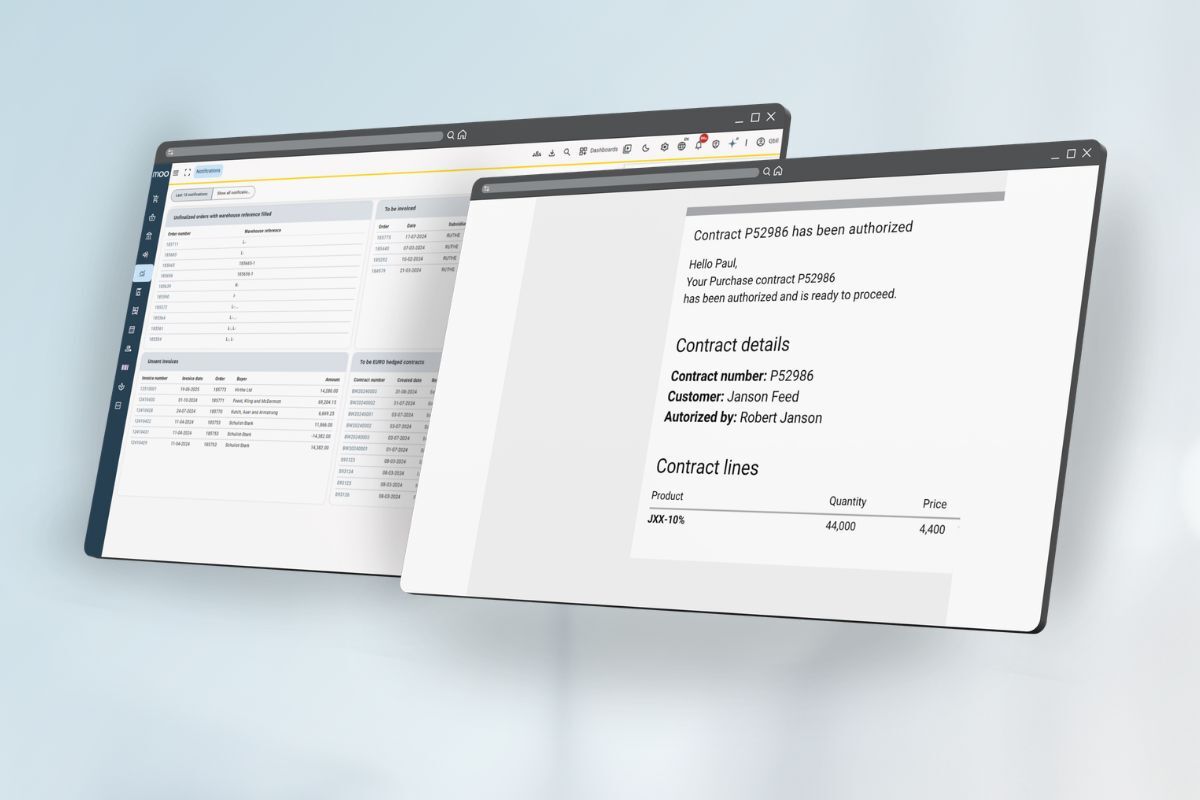
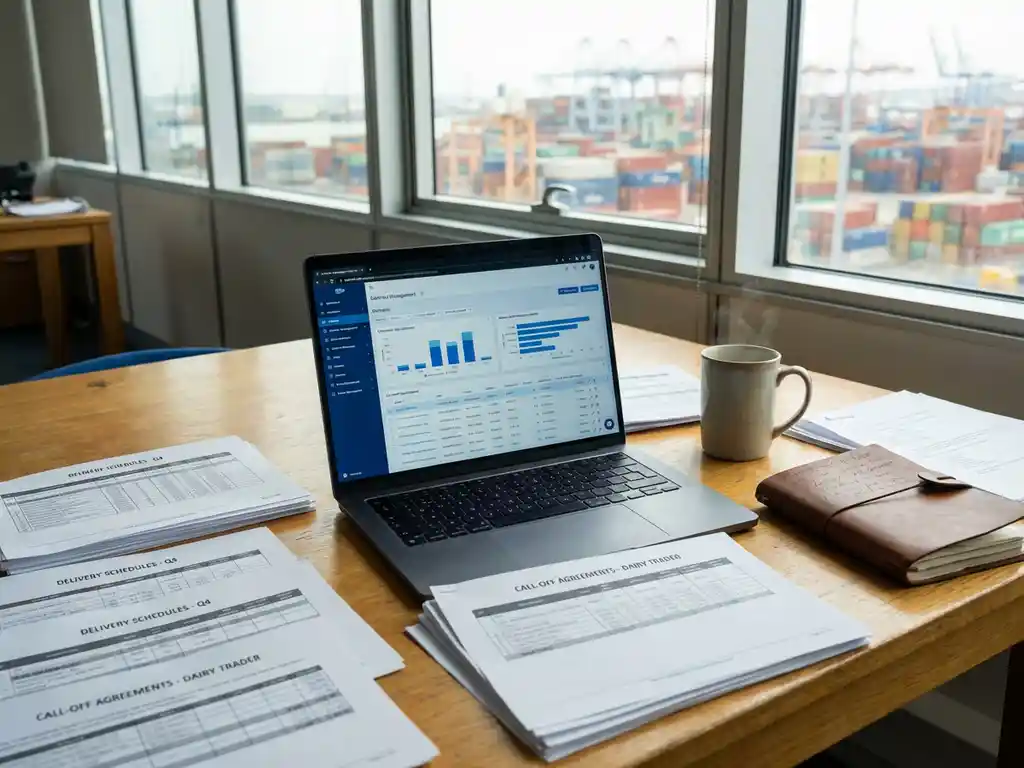
Dairy traders manage contracts, call-offs, and deliveries through systematic position tracking, automated alerts for delivery schedules, and real-time visibility into their trading operations. Successful traders use ZUIVELHANDELSOFTWARE to coordinate multiple simultaneous contracts while maintaining accurate buy-sell positions. Without proper systems, traders risk overselling, delivery conflicts, and financial losses due to poor position visibility.
What challenges do dairy traders face when managing multiple contracts and deliveries?
Dairy traders encounter complex operational challenges, including managing dozens of simultaneous contracts, tracking partial deliveries across different timeframes, and coordinating call-offs with customers in various time zones. The biggest challenge is maintaining real-time visibility into trading positions while dealing with fluctuating market conditions and changing customer demands.
Managing multiple contracts becomes particularly difficult when dealing with bulk commodities such as milk powder, lactose, or whey protein. A single contract for 100,000 kilograms might be delivered in batches over several months, with each call-off requiring precise tracking to avoid overselling or delivery conflicts. Traders must monitor what has been sold versus what has been purchased, track pending deliveries, and coordinate logistics across international borders.
The challenge intensifies when customers change delivery schedules, request different batch sizes, or modify specifications. Without proper systems, traders lose oversight of their positions, leading to potential financial exposure. Market volatility adds another layer of complexity, as traders need to make quick decisions based on accurate position data while managing risk across multiple commodities simultaneously.
How do successful dairy traders track contract performance and delivery schedules?
Successful dairy traders use digital tracking systems with automated alerts for delivery deadlines, position management dashboards, and integrated logistics coordination. These systems provide real-time visibility into contract fulfillment and prevent overselling through accurate position tracking that connects contract management with delivery scheduling.
Experienced traders implement systematic approaches that monitor contract performance against delivery commitments. They use automated alerts that notify them of upcoming delivery deadlines, payment terms, and contract milestones. This prevents missed deliveries and ensures smooth customer relationships while maintaining cash flow predictability.
The most effective traders integrate their contract management with logistics coordination, creating a connected system in which call-offs automatically update inventory positions and trigger delivery arrangements. This integration eliminates manual errors and provides instant visibility into available inventory versus committed sales. Positiemanagement becomes automated, with real-time updates showing exactly what is available to sell without risking overselling.
Digital systems also enable better customer service through accurate delivery tracking and proactive communication about shipment status. Traders can provide customers with precise delivery information while maintaining internal visibility into their trading positions across all active contracts.
What’s the difference between manual tracking and automated dairy trading systems?
Manual tracking using Excel spreadsheets requires constant updates and carries a high risk of errors, while automated ZUIVELHANDELSOFTWARE provides real-time position updates with integrated contract and delivery management. Automated systems offer superior accuracy, scalability, and decision-making speed, though manual methods can work for smaller operations with limited complexity.
Excel-based tracking demands a significant time investment for data entry, position calculations, and manual cross-checking between contracts and deliveries. Traders spend hours updating spreadsheets, calculating positions, and verifying information across multiple files. This approach works initially but becomes overwhelming as trading volumes grow and complexity increases.
Automated systems eliminate manual data entry through integrated workflows that update positions automatically when contracts are entered or deliveries are processed. These systems provide instant visibility into buy-sell positions, available inventory, and pending commitments. The software handles complex calculations and provides alerts for potential issues before they become problems.
The difference in accuracy is substantial. Manual systems rely on human data entry, creating opportunities for errors that can lead to overselling or missed deliveries. Automated systems reduce these risks through built-in validation and real-time position tracking. For growing trading operations, automated systems become essential for maintaining control and profitability while scaling business operations.
Why do dairy traders lose track of their positions and how can this be prevented?
Dairy traders lose track of their positions when manual systems become overwhelmed by complexity, data entry errors accumulate, or information exists in multiple disconnected systems. This creates dangerous situations in which traders do not know their true buy-sell positions, risking overselling and financial losses due to poor visibility into their trading exposure.
Position tracking failures typically occur when traders rely on spreadsheets that are not updated consistently or when information is scattered across different systems. A trader might track contracts in one spreadsheet, deliveries in another, and inventory in a third system. Without integration, it becomes impossible to maintain accurate real-time positions, especially when dealing with partial deliveries and multiple call-offs from a single contract.
The financial risks are significant. Traders who lose position visibility might oversell products they do not have, leading to expensive spot market purchases to fulfill commitments. They might also miss profitable selling opportunities because they are unsure about available inventory. In volatile markets, these mistakes can quickly erode already thin trading margins.
Prevention requires implementing connected systems that automatically update positions when contracts are entered or deliveries are processed. Professional implementation of integrated trading systems ensures accurate position tracking from day one. The key is choosing systems designed specifically for commodity trading that can handle the complexity of managing multiple contracts, partial deliveries, and call-off schedules while maintaining real-time position accuracy.
For traders ready to move beyond Excel-based tracking, praten met specialisten who understand dairy trading operations can help identify the right approach for maintaining accurate position tracking while scaling trading operations effectively.
Veelgestelde vragen
How quickly can a dairy trading operation implement automated position tracking systems?
Implementation typically takes 2-6 weeks depending on the complexity of existing operations and data migration requirements. Most dairy traders can begin using basic position tracking features within the first week, with full integration of contracts, deliveries, and reporting completed by week 4. The key is having clean historical data and clear processes defined before implementation begins.
What happens if automated systems fail or go offline during critical trading periods?
Professional dairy trading systems include backup protocols and offline capabilities to maintain operations during system downtime. Most platforms offer cloud-based redundancy, local data caching, and emergency procedures that allow traders to continue operations manually while systems are restored. The risk is significantly lower than relying solely on Excel spreadsheets stored on individual computers.
Can small dairy trading operations justify the cost of automated trading software?
Small operations can often justify automation costs through reduced errors and time savings, even with limited trading volume. Many platforms offer scalable pricing based on transaction volume or number of users. The break-even point typically occurs when manual tracking requires more than 10-15 hours per week or when a single position tracking error could cost more than annual software fees.
How do automated systems handle complex dairy product specifications and quality requirements?
Modern dairy trading software manages detailed product specifications including protein content, moisture levels, packaging requirements, and quality certifications within each contract. The systems can track specification changes, manage different grades of the same commodity, and ensure deliveries match contracted specifications. This prevents costly specification mismatches that are common with manual tracking.
What's the biggest mistake traders make when transitioning from Excel to automated systems?
The biggest mistake is trying to replicate Excel processes exactly instead of redesigning workflows to leverage automation capabilities. Successful transitions involve reimagining how contracts, deliveries, and positions connect rather than simply digitizing existing manual processes. Traders should focus on defining clear business rules that the system can automate rather than maintaining complex manual calculations.
How do automated systems help with regulatory compliance and audit requirements?
Automated dairy trading systems maintain complete audit trails of all transactions, position changes, and delivery modifications with timestamps and user tracking. This creates comprehensive documentation for regulatory compliance, internal audits, and financial reporting. The systems can generate compliance reports automatically and maintain historical data that would be difficult to reconstruct from Excel spreadsheets.