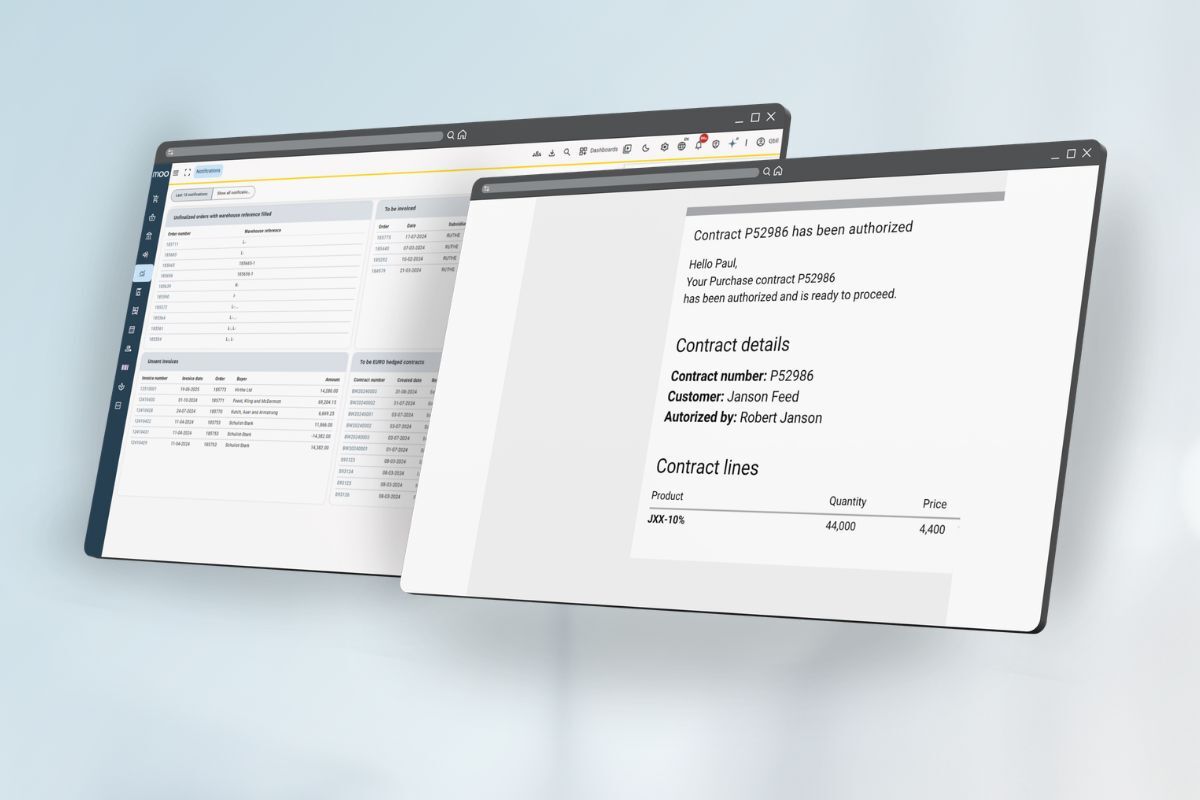

Dairy trading businesses need better data organisation because they handle complex, interconnected information streams that directly impact profitability. Poor data management leads to missed opportunities, pricing errors, and inventory miscalculations that can destroy thin profit margins. Modern dairy traders require real-time visibility into contracts, positions, and market movements to make profitable decisions in this fast-moving industry.
What makes data organisation so challenging for dairy trading businesses?
Dairy trading businesses face unique data complexity because they manage multiple contract types, fluctuating prices, varying delivery schedules, and quality specifications simultaneously. The interconnected nature of buyer-supplier relationships creates a web of information that traditional systems struggle to handle effectively.
The challenge begins with the sheer variety of data types. Traders must track contract specifications, including protein levels, fat content, moisture percentages, and other quality parameters that vary by product and customer. Each contract may involve different pricing mechanisms, delivery terms, and payment schedules that require careful monitoring.
Market volatility adds another layer of complexity. Dairy commodity prices fluctuate daily based on global supply, weather conditions, and demand patterns. Traders need to track these movements while managing their position exposure across multiple contracts and time horizons.
The interconnected relationship network makes data organisation particularly challenging. In dairy trading, today’s customer often becomes tomorrow’s supplier. This creates complex data relationships in which the same company appears in multiple roles across different transactions, making it difficult to maintain clear, organised records.
Quality specifications further complicate matters. Different products require different storage conditions, have varying shelf lives, and must meet specific regulatory requirements. Managing this information alongside commercial terms creates data management nightmares for businesses using basic systems.
Why does poor data organisation cost dairy traders money?
Poor data organisation directly impacts profitability through missed contract deadlines, inventory miscalculations, duplicate orders, and pricing errors. These operational failures are particularly damaging in dairy trading, where margins are typically thin and market timing is crucial for success.
Missed contract deadlines represent immediate financial losses. When delivery schedules aren’t properly tracked, traders may face penalty clauses or lose customer relationships. Late deliveries can also result in quality issues, as dairy products are time-sensitive and may deteriorate if not handled according to schedule.
Inventory miscalculations create costly problems. Overestimating available stock leads to overselling, forcing traders to source products at potentially higher spot prices. Underestimating inventory results in missed sales opportunities and potential product waste, as dairy ingredients have limited shelf lives.
The inability to track real-time positions poses the greatest financial risk. Dairy traders need to know exactly how much they’ve bought versus sold at any given moment. Without this visibility, they may unknowingly expose themselves to market risk or miss profitable arbitrage opportunities.
Pricing errors compound quickly in high-volume trading. A small mistake in price calculation, when multiplied across large quantities, can eliminate entire deal profits. Poor data organisation makes it difficult to verify pricing accuracy and catch errors before they impact financial results.
Duplicate orders create additional costs through unnecessary transactions, storage fees, and administrative overhead. When data is scattered across multiple systems, it becomes easy to accidentally process the same order twice or lose track of what’s already been arranged.
What happens when dairy trading data is scattered across multiple systems?
When dairy trading data is fragmented across Excel sheets, emails, and different software platforms, businesses experience decision-making delays, communication errors, and operational inefficiencies. This fragmentation prevents traders from accessing complete information when they need it most.
Decision-making becomes significantly slower when information is scattered. Traders waste valuable time searching through multiple systems to gather the data needed for a single decision. In fast-moving dairy markets, these delays can mean missing profitable opportunities or failing to respond quickly to market changes.
Communication errors multiply when team members work from different information sources. Sales teams may quote prices based on outdated data while operations schedules deliveries using different inventory figures. This lack of synchronisation leads to customer service problems and internal conflicts.
ERP-Software für die Milchindustrie addresses these fragmentation issues by centralising all trading data in one accessible system. Without this centralisation, businesses struggle to maintain data accuracy, as information gets updated in some systems but not others.
Reporting becomes nearly impossible when data lives in multiple locations. Management cannot get accurate overviews of business performance, position exposure, or profitability analysis. This lack of visibility makes strategic planning difficult and increases business risk.
Customer service suffers when staff cannot quickly access complete customer information. Simple questions about order status, delivery schedules, or invoice details require checking multiple systems, leading to longer response times and frustrated customers.
Compliance and audit trails become problematic when transaction data is scattered. Regulatory requirements for food safety, traceability, and financial reporting are harder to meet when information isn’t systematically organised and easily retrievable.
How does better data organisation transform dairy trading operations?
Better data organisation transforms dairy trading operations by enabling real-time position tracking, automated workflow processes, improved customer service, and faster decision-making. Centralised data management provides the visibility and control needed to operate profitably in competitive dairy markets.
Real-time position tracking becomes possible when all contract, inventory, and transaction data is properly organised. Traders can instantly see their exposure across different products, time periods, and market conditions. This visibility enables proactive risk management and helps identify profitable trading opportunities.
Automated workflow processes reduce manual errors and speed up operations. When data is properly structured, routine tasks like order processing, invoice generation, and delivery scheduling can be automated. This reduces administrative overhead and ensures consistent execution of standard procedures.
Customer service improves dramatically when staff have immediate access to complete customer information. Queries about orders, deliveries, or payments can be answered quickly and accurately. This responsiveness builds stronger customer relationships and supports business growth.
Decision-making accelerates when all relevant information is available in one place. Traders can quickly evaluate new opportunities, assess market risks, and respond to customer requests. This speed advantage is particularly valuable in volatile dairy markets, where timing affects profitability.
Enhanced risk management capabilities emerge from better data organisation. Businesses can monitor credit exposure, track contract performance, and identify potential problems before they become costly issues. This proactive approach protects profitability and reduces operational stress.
The transformation typically begins with implementing ERP-Software für die Milchindustrie that centralises all trading operations. Professional implementation ensures systems are configured correctly and staff are properly trained. With the right data organisation foundation, dairy trading businesses can focus on growth rather than administrative challenges. For businesses ready to transform their operations, Professionelle Anleitung can help identify the best approach for their specific needs.
Häufig gestellte Fragen
How long does it typically take to implement a new data organization system for a dairy trading business?
Implementation timelines vary based on business complexity and system requirements, but most dairy trading businesses can expect 3-6 months for a complete ERP implementation. This includes data migration, system configuration, staff training, and testing phases. Businesses with more complex operations or multiple locations may require 6-12 months for full deployment.
What are the most common mistakes dairy traders make when organizing their data?
The biggest mistakes include relying too heavily on Excel spreadsheets for critical operations, failing to establish data entry standards across teams, and not implementing proper backup procedures. Many businesses also make the error of customizing systems too heavily during initial setup, which can complicate future upgrades and maintenance.
Can small dairy trading businesses justify the cost of professional ERP software?
Yes, even small dairy trading operations often see ROI within 12-18 months through reduced errors, time savings, and improved decision-making capabilities. Many ERP solutions offer scalable pricing models that make them accessible to smaller businesses. The cost of poor data organization typically exceeds software investment costs when you factor in missed opportunities and operational inefficiencies.
How do you maintain data accuracy when multiple team members are entering information?
Implement standardized data entry procedures with required fields and validation rules to prevent errors. Assign specific responsibilities for data maintenance to trained team members and establish regular data review processes. Modern ERP systems can also provide user permission controls and audit trails to track changes and maintain accountability.
What should dairy traders prioritize when migrating from spreadsheets to an organized system?
Start by cleaning and standardizing your existing data before migration, focusing first on active contracts and customer information. Prioritize critical business processes like order management and inventory tracking for initial implementation. Plan for parallel running periods where both old and new systems operate simultaneously to ensure data accuracy and minimize business disruption.
How can dairy trading businesses ensure their data organization supports regulatory compliance?
Choose systems that provide comprehensive audit trails and can generate required compliance reports automatically. Ensure your data structure captures all necessary traceability information from source to delivery, including quality specifications and handling records. Regular data backups and secure access controls are also essential for meeting food safety and financial reporting requirements.
What integration capabilities should dairy traders look for when selecting data management software?
Look for systems that can integrate with existing accounting software, laboratory testing systems, and transportation management platforms. API connectivity for market data feeds is crucial for real-time pricing updates. The system should also support integration with customer and supplier portals to streamline communication and reduce manual data entry across the supply chain.