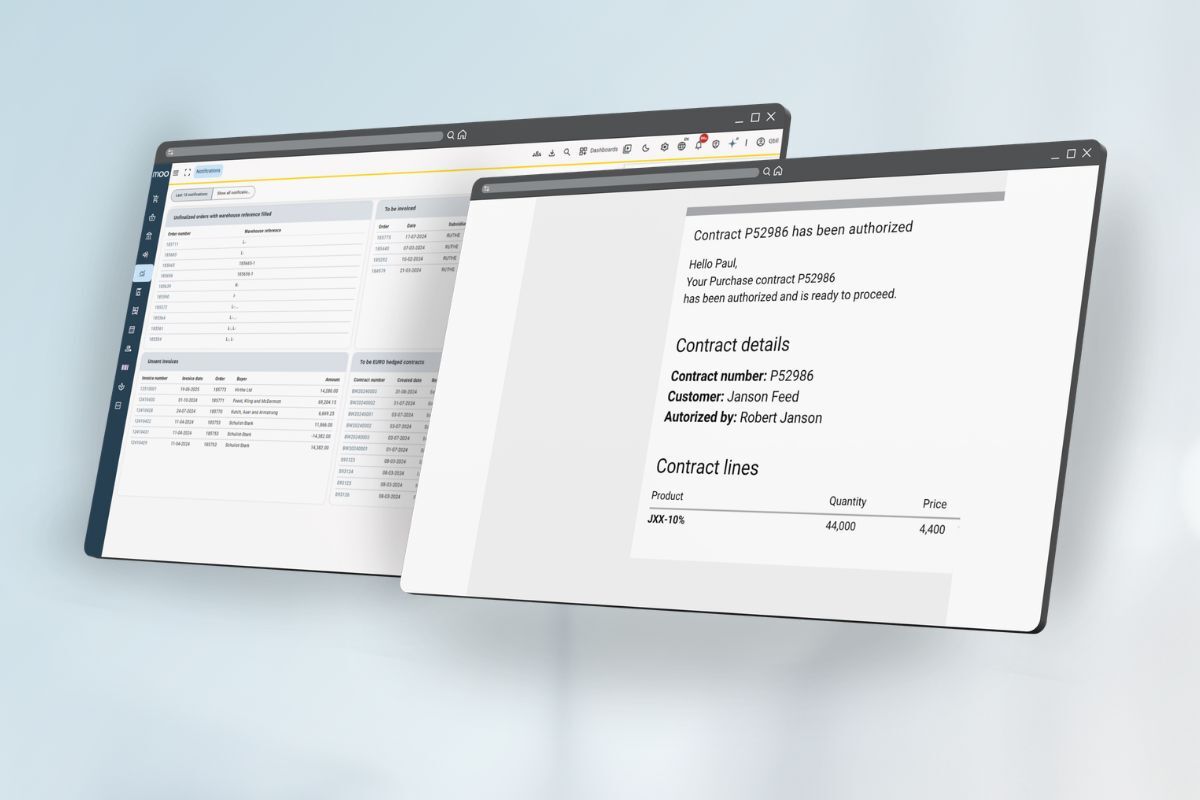

When ingredient traders lose track of their inventory, they face immediate operational chaos, including missed sales opportunities, double-selling risks, and damaged customer relationships. Poor inventory tracking creates financial losses through margin erosion and cash flow problems while undermining trust with suppliers and customers. Effective ERP-Software für die Milchindustrie prevents these costly mistakes through real-time visibility and automated tracking systems.
What actually happens when ingredient traders lose track of their inventory?
Ingredient traders without accurate inventory tracking experience immediate operational chaos that disrupts their entire business. They miss profitable sales opportunities because they cannot confirm product availability, accidentally oversell products they do not have, and struggle to fulfil existing contracts on time. Customer relationships suffer when promised deliveries cannot be met.
The operational breakdown begins with simple uncertainty about stock levels. Traders cannot confidently quote delivery dates or accept new orders without manually checking multiple sources. Phone calls to warehouses become frequent interruptions, slowing deal-making in fast-moving markets where timing determines profitability.
Double-selling scenarios create the most serious problems. When the same batch of milk powder or lactose is sold to multiple customers, traders must scramble to source replacement products at potentially higher costs. This erodes margins and forces difficult conversations with customers about delayed deliveries.
Customer relationships deteriorate quickly when traders cannot provide reliable information about order status or delivery schedules. In tight-knit trading networks where reputation matters enormously, word spreads fast about unreliable suppliers. Customers begin placing orders elsewhere, reducing future business opportunities.
Why do small inventory tracking mistakes lead to such big financial losses?
Small inventory discrepancies compound rapidly in ingredient trading because transactions involve large volumes and tight margins. A minor error in tracking 10,000 kilos of milk powder can result in contract breaches, emergency sourcing at premium prices, and cash flow disruptions that affect multiple deals simultaneously.
Ingredient trading operates on margins typically between 1% and 3%, leaving little room for error. When inventory mistakes force traders to source replacement products at higher prices, the additional costs often exceed the entire profit margin on affected deals. A 5% price increase for emergency sourcing can turn profitable transactions into losses.
Cash flow problems multiply when inventory errors delay payments. Customers withhold payment for delayed deliveries while traders must still pay suppliers for products already received. This creates a cash squeeze that can affect the ability to finance new deals or maintain credit lines with banks.
Contract fulfilment issues trigger penalty clauses and legal complications. Many ingredient trading contracts include specific delivery windows and quality requirements. Missing these commitments due to inventory confusion can result in financial penalties, forced price reductions, or complete contract cancellations.
The ripple effect extends beyond individual transactions. Poor inventory management reduces working capital efficiency, increases borrowing costs, and limits the ability to take advantage of market opportunities that require quick decision-making.
How do inventory tracking problems affect relationships with suppliers and customers?
Poor inventory management destroys trust throughout the trading network by creating unreliable communication and unpredictable delivery performance. Suppliers lose confidence in traders who cannot accurately forecast their needs, while customers seek more dependable partners that provide consistent service and transparent order tracking.
Supplier relationships suffer when traders place rush orders due to inventory miscalculations. Emergency requests disrupt suppliers’ production planning and often come with premium pricing. Repeated urgent orders signal poor planning and may result in suppliers prioritising other customers with more predictable ordering patterns.
Customer trust erodes through inconsistent information and delivery delays. When traders cannot provide accurate updates about order status or delivery schedules, customers must maintain larger safety stocks or seek backup suppliers. This reduces customer loyalty and makes future sales more difficult.
In ingredient trading networks where the same companies often act as both customers and suppliers, reputation damage spreads quickly. Poor inventory management affects relationships across multiple transaction types, potentially costing both buying and selling opportunities with the same trading partners.
Credit relationships also deteriorate when inventory problems create payment delays or disputes. Banks and trade finance providers view inventory management capabilities as indicators of business reliability, affecting credit terms and facility availability.
What are the warning signs that your inventory tracking system is failing?
Key warning signs include frequent discrepancies between recorded and actual stock levels, increasing reliance on manual workarounds, regular stockouts of products that should be available, and more time spent reconciling inventory records instead of trading.
Manual workarounds become more common as systems fail to provide accurate information. Traders start maintaining separate spreadsheets, making frequent warehouse calls, or creating informal tracking methods outside the main system. These workarounds indicate that the primary inventory system cannot support business needs.
Reconciliation activities consume increasing amounts of time as discrepancies multiply. Staff spend more hours matching records, investigating differences, and correcting errors instead of focusing on revenue-generating activities. Monthly inventory counts reveal larger variances that require extensive investigation.
Customer complaints about delivery delays or incorrect order information increase noticeably. Customers report receiving different quantities than ordered, experiencing unexpected delivery delays, or getting conflicting information from different staff members about the same orders.
Financial indicators also reveal inventory problems. Margin erosion occurs as emergency sourcing becomes more frequent, cash flow becomes less predictable, and working capital efficiency decreases. Audit findings highlight inventory control weaknesses that require immediate attention.
How can ingredient traders prevent inventory tracking disasters before they happen?
Prevention requires implementing robust inventory management systems designed specifically for ingredient trading, establishing clear procedures for stock updates, conducting regular reconciliations, and training staff on proper inventory handling protocols. Modern ERP-Software für die Milchindustrie provides real-time visibility and automated tracking capabilities.
Implementing specialised trading software eliminates manual tracking errors and provides real-time inventory visibility across multiple locations. These systems automatically update stock levels when orders are placed, deliveries are received, or shipments are made, ensuring accurate information for trading decisions.
Regular reconciliation procedures catch discrepancies before they become major problems. Weekly cycle counts, monthly full inventories, and daily transaction reviews help identify and correct errors quickly. Establishing clear responsibility for inventory accuracy ensures accountability throughout the organisation.
Staff training on inventory procedures reduces human errors that compound into larger problems. Everyone handling inventory transactions must understand proper recording methods, update procedures, and escalation protocols when discrepancies are discovered.
System integration between trading, warehouse, and accounting systems prevents information gaps that create tracking problems. When all systems share real-time data, inventory levels remain accurate across all business functions without manual intervention.
Professionell ERP implementation ensures systems are configured correctly for ingredient trading requirements. Proper setup includes automated workflows, exception reporting, and integration with existing business processes to maintain accuracy without disrupting daily operations.
For ingredient traders ready to eliminate inventory tracking problems, Professionelle Anleitung can help identify the right solutions for specific business requirements and ensure successful implementation.
Häufig gestellte Fragen
How quickly can I expect to see results after implementing a new inventory tracking system?
Most ingredient traders see immediate improvements in stock visibility within 2-4 weeks of implementation, with significant reductions in inventory discrepancies appearing within the first month. Full benefits, including improved cash flow and stronger customer relationships, typically develop over 3-6 months as processes become fully integrated and staff adapt to the new system.
What's the biggest mistake ingredient traders make when trying to fix inventory tracking problems?
The most common mistake is attempting to solve inventory problems with spreadsheets or manual workarounds instead of addressing the root cause. These temporary fixes actually make problems worse by creating multiple data sources that quickly become inconsistent, leading to more confusion and errors than the original system.
How do I choose between different ERP solutions for ingredient trading?
Focus on systems specifically designed for commodity trading that offer real-time inventory updates, multi-location tracking, and integration with trading workflows. Look for features like batch tracking, expiration date management, and automated contract fulfillment alerts. The system should handle your specific products (dairy, grains, etc.) and integrate with your existing accounting and warehouse management systems.
Can I implement inventory tracking improvements gradually, or do I need to change everything at once?
A phased implementation approach often works best for ingredient traders. Start with core inventory tracking for your highest-volume products, then gradually expand to include additional products, locations, and advanced features. This allows staff to adapt to changes while maintaining business continuity and reduces implementation risks.
What should I do if my current inventory system shows different stock levels than my warehouse counts?
Immediately conduct a full physical count of discrepant items and identify the root cause of differences. Common causes include unreported transactions, timing differences between system updates and physical movements, or data entry errors. Document all variances, adjust system records to match physical counts, and implement daily reconciliation procedures to prevent future discrepancies.
How much should I budget for implementing proper inventory tracking for my ingredient trading business?
Implementation costs typically range from $15,000-$100,000+ depending on business size, number of locations, and system complexity. Consider both software licensing, implementation services, staff training, and potential business disruption during transition. Most traders recover these costs within 6-12 months through reduced inventory errors, improved margins, and better cash flow management.
What happens to my existing data when I switch to a new inventory tracking system?
Professional implementation includes data migration services to transfer your current inventory records, supplier information, and transaction history to the new system. The migration process typically involves data cleansing to remove duplicates and errors, ensuring you start with accurate information. Most implementations include parallel running periods to verify data accuracy before fully switching to the new system.