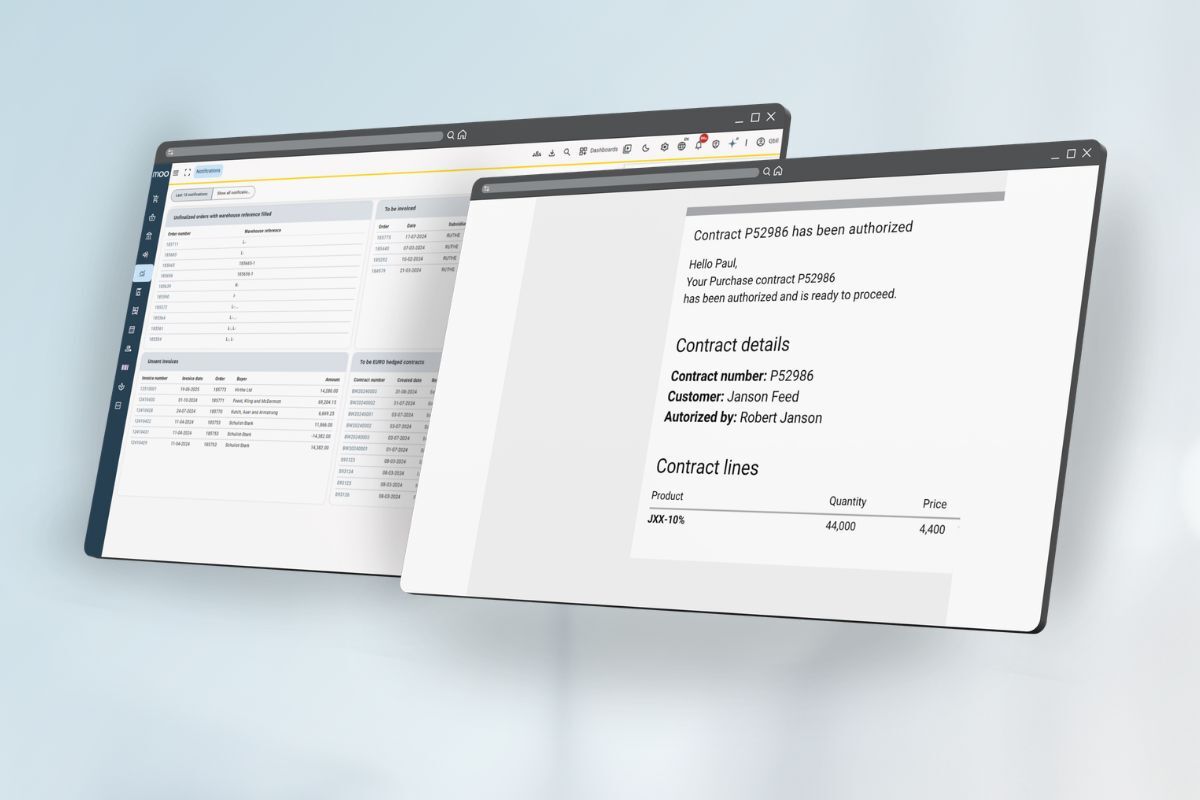

Ingredient traders need instant access to their trading positions because their profitability depends on knowing exactly how much they have bought versus sold at any given moment. In fast-moving commodity markets, positions change constantly through new contracts, deliveries, and cancellations. Without real-time visibility, traders risk overcommitment, margin squeezes, and missed opportunities that can severely impact their bottom line.
What exactly is a trading position, and why does it matter for ingredient traders?
A trading position represents the difference between what an ingredient trader has bought and sold across all their contracts. It shows whether they are long (bought more than sold), short (sold more than bought), or balanced in each commodity they handle.
For dairy and ingredient traders, positions matter enormously because they operate on razor-thin margins. When you are trading 100,000 kilos of milk powder with delivery spread across several months, knowing your exact commitment at any moment determines whether your next deal will be profitable or push you into a loss.
Your position directly impacts your risk exposure. If you are long on lactose and prices start falling, every day you remain overcommitted costs money. Conversely, being short when prices rise means you are paying more to fulfil your sales contracts. This real-time balance between bought and sold quantities forms the foundation of successful ingredient trading.
Moderno Software ERP para la industria láctea operations tracks these positions automatically, eliminating the manual calculations that often lead to costly errors in fast-moving markets.
How do trading positions change throughout the day in ingredient markets?
Trading positions in ingredient markets shift continuously as new contracts are signed, existing deliveries are made, orders are cancelled, and market conditions change. A trader might start the day balanced but end up significantly long or short based on customer calls and supplier offers.
Consider a typical morning: you receive three new orders for whey protein, accept two supplier offers for milk powder, and learn that a planned delivery has been postponed by two weeks. Each of these events immediately alters your position, requiring instant recalculation of your exposure across all commodities.
The dynamic nature becomes even more complex when dealing with multiple contract terms. Some agreements involve spot deliveries; others span months with weekly shipments. Price fluctuations throughout the day can turn profitable positions into losses, making continuous monitoring essential for effective decision-making.
Ingredient markets do not pause for manual updates. While you are calculating yesterday’s position in Excel, today’s opportunities are already moving to competitors who have instant access to their current exposure.
What risks do ingredient traders face without real-time position visibility?
Without instant access to position data, ingredient traders face four critical dangers: overcommitment beyond their financial capacity, margin squeezes from unexpected exposure, delivery conflicts when storage or logistics clash, and missed opportunities that require quick responses.
Overcommitment represents the most serious risk. When you do not know your exact position, it is easy to accept one contract too many, leaving you scrambling to source expensive spot-market supplies to fulfil obligations. This scenario can wipe out months of careful margin management in a single transaction.
Delivery conflicts create operational nightmares. Without real-time visibility, you might discover you have committed to receive 50,000 kilos of product on the same day your storage facility is already at capacity. The resulting logistics costs and potential contract penalties can severely damage profitability.
Perhaps most frustrating are the missed opportunities. When a supplier offers attractive pricing on short notice, traders without instant position data must either pass on the deal or take dangerous risks. In ingredient markets where timing often determines profitability, this limitation puts businesses at a significant competitive disadvantage.
How does instant position access improve trading profitability?
Real-time position data enables better pricing decisions by showing exactly how much risk you can afford to take on each deal. When you know your current exposure instantly, you can price new contracts more aggressively or defensively based on your actual situation rather than outdated estimates.
Timing becomes a competitive advantage with instant access. You can respond immediately to market opportunities without the delays caused by manual position calculations. This speed often makes the difference between securing profitable contracts and watching them go to faster competitors.
Risk mitigation improves dramatically when you can see developing problems before they become critical. If your position in a particular ingredient is growing uncomfortably large, instant visibility allows you to adjust your trading strategy before market movements create significant losses.
The ability to capitalise on market volatility represents perhaps the greatest improvement in profitability. When prices move quickly, traders with real-time position data can make informed decisions about whether to hedge, cover, or extend their exposure. This responsiveness transforms market uncertainty from a threat into an opportunity.
Professional traders increasingly rely on specialised systems that provide this instant visibility. Putting proper position tracking in place often proves to be one of the most profitable technology investments ingredient trading businesses can make.
Preguntas frecuentes
How do I get started implementing real-time position tracking in my ingredient trading business?
Start by auditing your current position tracking methods and identifying the biggest pain points in your daily operations. Then evaluate ERP systems specifically designed for commodity trading that can integrate with your existing contracts and supplier relationships. Most successful implementations begin with a pilot program on one or two key ingredients before expanding to your full product range.
What's the biggest mistake ingredient traders make when setting up position monitoring systems?
The most common error is trying to track too many data points initially, which creates complexity without immediate value. Focus first on core position data - bought versus sold quantities and delivery dates - before adding advanced features like margin analysis or automated alerts. This approach ensures your team adopts the system quickly and sees immediate benefits.
Can real-time position tracking work for smaller ingredient trading operations, or is it only worthwhile for large companies?
Real-time position tracking is often more critical for smaller operations because they have less financial cushion to absorb position errors. Modern cloud-based systems offer scalable solutions that work for businesses trading just a few containers per month. The key is choosing a system that matches your transaction volume and complexity rather than over-engineering the solution.
How quickly should I expect to see ROI after implementing instant position visibility?
Most ingredient traders see measurable improvements within the first month through reduced position calculation time and fewer manual errors. The real ROI typically becomes apparent within 90 days as you start capturing market opportunities that were previously missed due to slow position updates. Many businesses report that preventing just one overcommitment incident pays for the entire system investment.
What happens if my internet connection goes down - will I lose access to critical position data?
Quality position tracking systems include offline capabilities and local data caching to ensure you maintain access to essential information during connectivity issues. Look for solutions that sync automatically when connection is restored and provide mobile access as a backup. This redundancy is crucial for ingredient traders who cannot afford to be blind to their positions during critical market moments.
How do I handle position tracking when dealing with complex contract terms like variable pricing or flexible delivery windows?
Advanced position tracking systems can accommodate complex contract structures by treating them as conditional positions with multiple scenarios. Set up your system to track both committed quantities and potential exposures under different contract conditions. This approach gives you visibility into your worst-case and best-case position scenarios, enabling more sophisticated risk management.
Should I integrate position tracking with my accounting system, or keep them separate?
Integration with your accounting system is highly recommended because it eliminates double data entry and ensures your financial records automatically reflect your actual trading positions. This connection also enables better cash flow forecasting and margin analysis. However, ensure your trading system can operate independently during accounting system maintenance to avoid operational disruptions.